Living Room
Philadelphia @250: Living Room is a two‐month exhibition showcasing work by artists who live in Philadelphia and produce their work at NextFab. Presented during the city’s 250‐year celebrations, the show invites visitors into a “living room” of local creativity—highlighting the stories, materials, and perspectives that shape Philadelphia’s artistan community.
Exhibiting Artists:
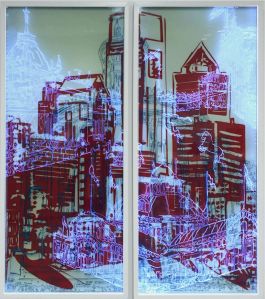
Explore the city as a layered place of memory, erasure, transformation, and possibility. My work begins with the built environment: bridges, facades, streets, monuments, and architectural fragments that remain in public memory even after they disappear from view.
Using drawing, photography, digital manipulation, laser-engraved plexiglass, hand coloring, paper, wood, and LED light, I build images in layers. These layers allow past and present to occupy the same visual space, revealing the hidden histories embedded in the urban landscape.
Philadelphia is central to this work, but the questions extend beyond one city. I am interested in what cities preserve, what they forget, and how each new structure carries traces of what came before. Through transparency, light, and fractured line, Invisible Cities asks the viewer to look again — to see the city not as a fixed image, but as a living archive.

Kris Pitzer
I make art that speaks to contradiction—between beauty and waste, permanence and impermanence, reverence and ruin. My practice sits at the uncomfortable intersection of ecological anxiety, personal vulnerability, and the quiet rituals of making. Whether I’m working in glass, metal, or wood, my work is driven by an urgency to confront the systems we’re complicit in—and the ones we create inside ourselves.
Hayato Matsushita
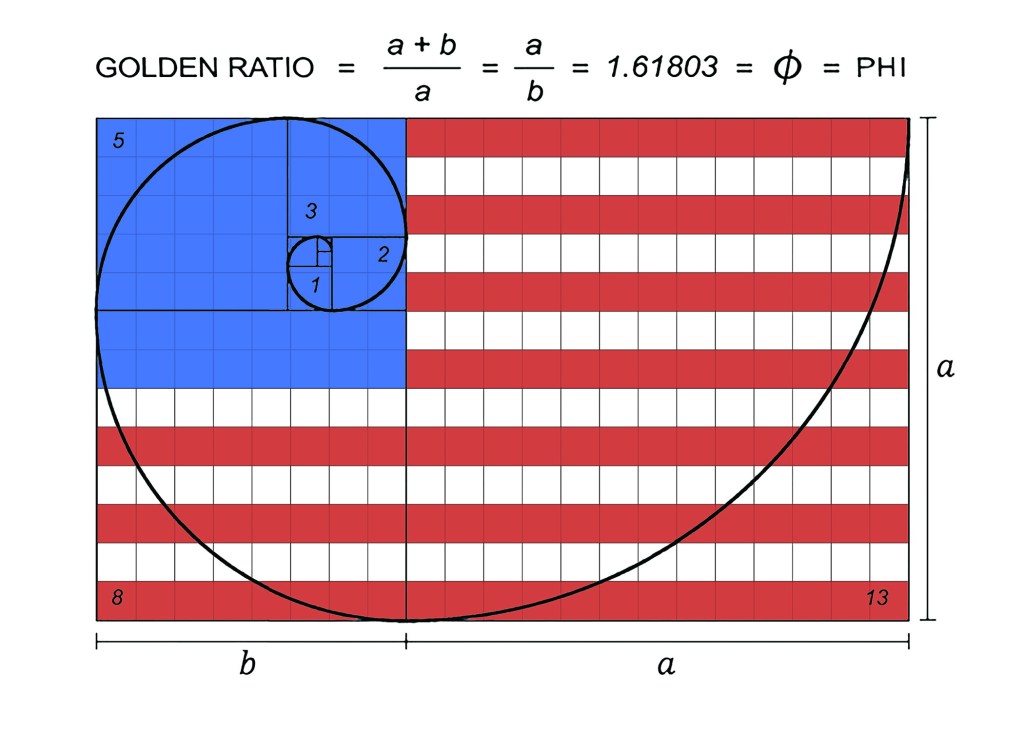
Hayato Matsushita is a Japanese-born American artist and cultural archaeologist whose work explores the hidden geometry and symbolic language embedded within American history. Through research into maps, flags, historical documents, and urban planning, he uncovers connections between design, philosophy, and collective memory. His recent work focuses on Philadelphia, examining the city as both a physical place and an evolving idea where history, civic life, and imagination converge. By reinterpreting familiar symbols through geometry and pattern, Matsushita invites viewers to reconsider the foundations of the American experiment and the stories that continue to shape it.
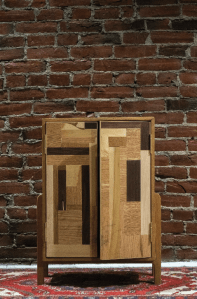
Chris Schmucki is an educator and woodworker currently residing in West Philadelphia. Having been exposed to woodworking from an early age, Chris carries a deep appreciation and respect for craft and building. He has been a member of the Nextfab community for the past year and has reveled in the experience of community-facing craftsmanship. As someone who is concerned with the environmental impacts of furniture creation, Chris has devoted much of his time at Nextfab to working with salvaged materials. He is honored to present his work alongside such wonderful artists.
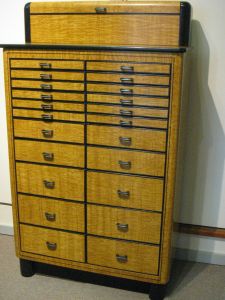
My studio work mainly focuses on bringing new life, via color and patterning, to cast off, neglected and ignored furniture, primarily from the first half of the 20th century. I work in a medium known as “vinegar painting” which was popular in the first half of the 19th century as a way to liven up everyday furniture. I started developing my work on furniture in the 1980’s and have published two books on decorative furniture finishing.
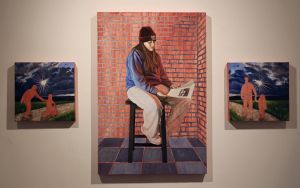
Grief can be extremely complicated depending on your past experiences, relationships and how you’re loved one passed away. Through my paintings and sculptures, I analyze how styles, subject matter, poses, space, and shapes can allow viewers to understand the nature of human mourning. I draw on both the sentimental and painful aspects of my childhood to create art that speaks to my present-day perspective on my father, his addiction, and the tragic way he passed. I use saturated, somber colors similar to the Chiaroscuro technique which is inspired by Caravaggio. I layer oil paint onto a carefully constructed canvas using a palette knife adding a course texture to the composition in response to the complicated memories I have with loss and addiction. I deliberately leave areas of the red exposed and unfinished representing how deep sorrow often feels unresolved and unfathomable. These areas allow the viewer to witness my process while symbolizing the persistent emotion of anger I experienced growing up with an alcoholic father. Creating art allows me to continue this exploration of my grief in reflection to the complex relationship I had with my alcoholic father who was murdered in 2023.
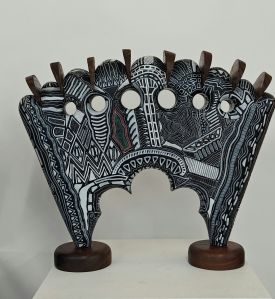
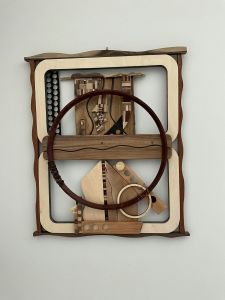
I love the medium of wood and know it well. Having been influenced by Kandinsky, I use both organic and geometric forms to construct my sculptures. Adding piece by piece I create both complex and kinetic designs. Some pieces are exotic woods showing their natural beauty and some are painted or patterned to create movement and balance.
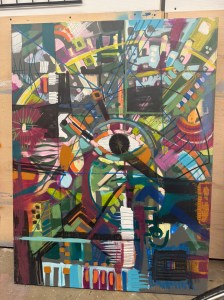
The openness of relating began with the decisions and negotiations of painting together. The reliability of the second person to participate in the call and answer model
of this painting style required both physical and mental presence. There had to be
a willingness to have deeper conversations about what was working (and not working)-
both on the canvas and in the studio.
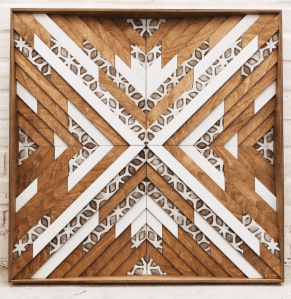
Mel Sage is a multifaceted artist who draws from her architecture and interior design background to create 3D wooden art pieces inspired by the awe-inspiring topographies of our natural environment.
Mel’s works are rich in natural and earthy tones and are handcrafted using the utmost attention to detail.
Susan F. Goldstein
As wood comes in many shades, so does human skin. Like a forest, we share the same spaces and breathe the same air. We can collaborate and celebrate our commonality and differences. There is beauty in sharing our diverse humanity. Like a circle, we are all connected.
I’ve done artwork my whole life. I’ve done ceramics for many years, enjoying working with clay … earth. Since I moved back to Philadelphia from California, I found NextFab. It gave me the opportunity to open up to new creative possibilities. I found that I have a profound connection to wood. I find fascination in the grains, textures, colors, density and bark. Each assemblage piece I start with arranging various pieces of wood and let them reveal their beautiful nature. I go with the grain, and go with the flow with joy.
Javier López
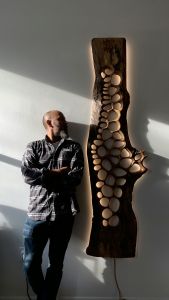
Wood + Geometry: Order in Dissolution
Nature manifests itself through concrete forms and relationships rooted in the balance of multiple interacting forces. The efficient use of these energies defines geometric patterns that repeat, mysteriously, across various scales of the cosmos.
This language guides both the creation of matter and its dissolution.
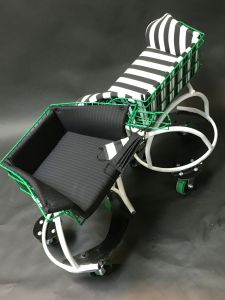
I derive pleasure from the design challenge. My artwork is not bound to a single material or technique. Problem-solving underscores my love of repurposing materials and my out-of-the-box way of looking at the world from many perspectives.
Cartrageous is an ongoing series of furniture developed from a single lounge chair made because I couldn’t afford good furniture. The repetition of walking past a steel-framed abandoned shopping cart at the end of my city block conjured up a lot of possibilities.
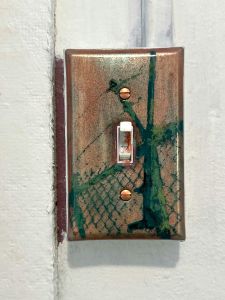
Through my art practice, I reexamine how we assign value, and explore ways to grow connection and energy through attention and care. My work is grounded in metalsmithing and documentation processes; it includes photography, jewelry, papermaking, video, and installation. I live in South Philly and am a member of DaVinci Art Alliance and NextFab, where I also teach enameling. Exhibition spaces have included DVAA, the Baltimore Jewelry Center, Peters Valley School of Craft, and Schuylkill Nature Center.
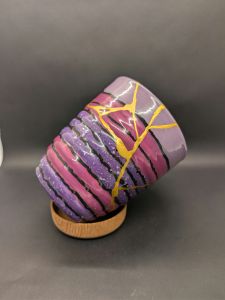
Dan Singer
Using traditional kintsugi techniques, I repair cherished housewares like plates, mugs, and vases that have broken over time. My objective is to restore utility but in a new form, transformed by process of breaking and golden repair into something new. For me, kintsugi asks us to consider what we throw away and what we preserve for ourselves and future generations.
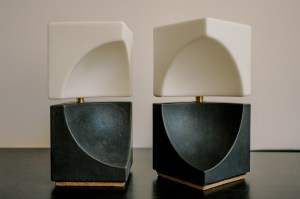
Aaron Anderson
Aaron creates sculptural, collectible lighting that brings together joy, curiosity, and functionality. Each lamp is made to order on American Street in Philadelphia and may feature slight variations—small marks of the hands and processes that made them.

